A home cinema rarely arrives in one purchase. It grows, and at each stage one or two changes do more than everything else. There are no prices here, because they differ too much from country to country; this is about what to do first, what can wait, and what a dedicated room changes.
Stage one: a better living room
Start with what you already own. The picture mode matters first: choose Filmmaker Mode where the television has it, otherwise a mode called Cinema or Movie, rather than Vivid or Standard. Our guide to picture settings goes through the rest. Then check the screen is big enough for where you sit; our screen size calculator works it out from your seat.
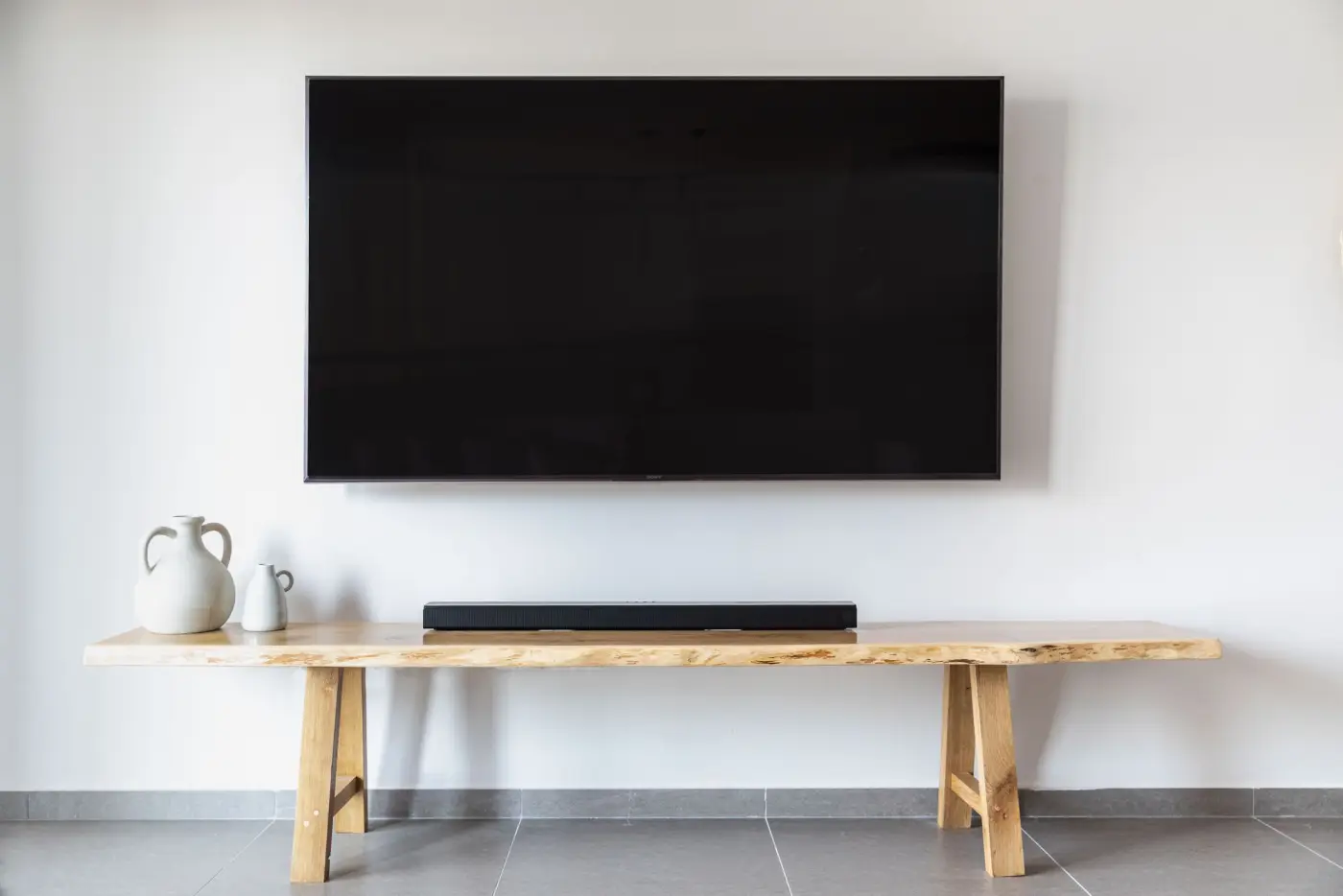
For sound, a soundbar with a subwoofer is the simplest large step up from television speakers. Choose one that can grow: with eARC, and ideally able to add wireless rear speakers later.
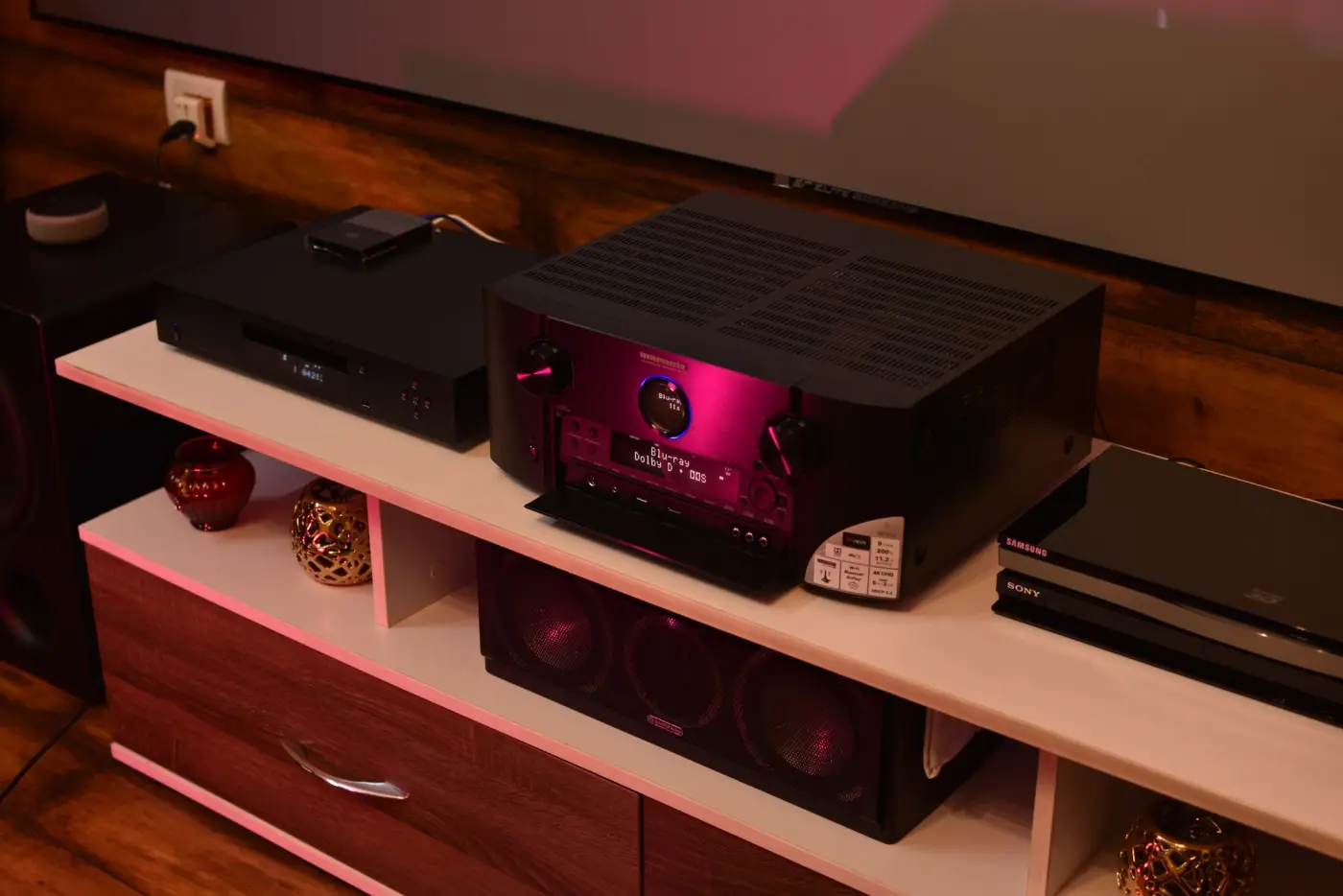
If you already know you want a full system one day, a receiver with a stereo pair or three front speakers is the other way in. It costs more at the start, but every speaker you buy now stays in the system later.
Stage two: a proper surround system
The next step is a receiver and 5.1 speakers, then height speakers: 5.1.2, then 5.1.4. Dolby puts the ear-level speakers at about the height of a seated listener’s ears. For upward-firing height speakers it recommends four rather than two where possible, for more precise movement overhead, and it advises matching height speakers to the main speakers in timbre and power as closely as possible.
This is also where room correction starts to matter. Run the receiver’s microphone setup with the room as you use it, then check the result. Our calibration guide lists the steps in order, and if you measure before and after with Room EQ Wizard, the REW Analyzer shows what changed.
Before buying the receiver, count the channels the layout needs; our guide to receiver channels explains the numbers.
At each stage, one or two changes do more than everything else.
Stage three: a room built for films
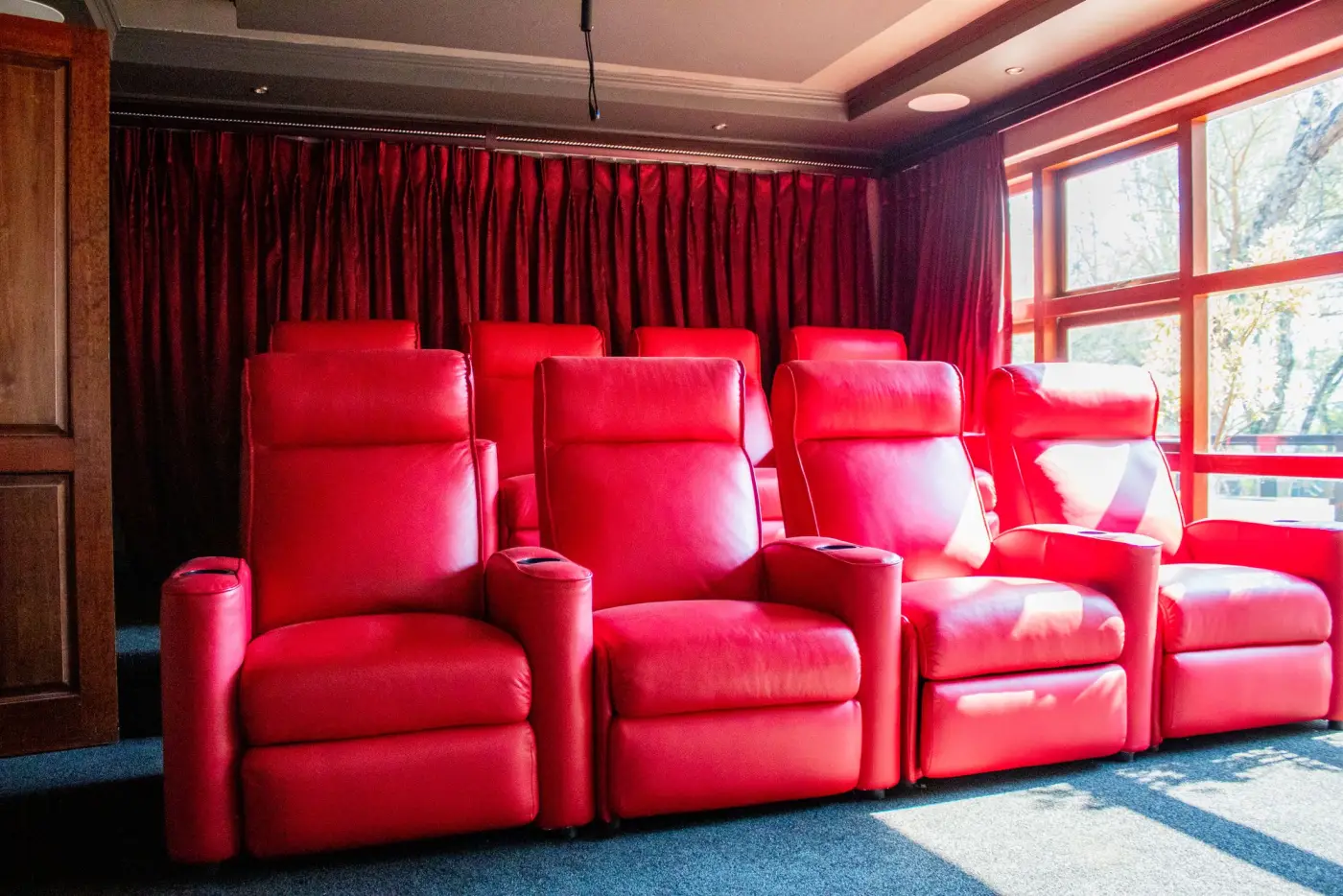
A dedicated room changes what is possible: control over light, so a projector and a large screen work; space for 7.1.4 with speakers in the ceiling; a second row on a riser; and acoustic treatment. CEDIA and CTA’s recommended practice for immersive audio aims for a reverberation time between 0.2 and 0.5 seconds; our acoustic treatment calculator estimates yours and shows where panels would go.
Bass is where a dedicated room repays planning. In Todd Welti’s research at Harman, in a rectangular room with the seats in the centre or towards the back, four subwoofers at the wall midpoints gave the most even bass from seat to seat, and two at the midpoints of opposite walls were very nearly as good, with more output. Planning for two subwoofers from the start, with the cable to reach them, is easier than adding them later.
Build the room on screen first. The design studio checks speaker angles for Dolby Atmos, DTS:X and Auro-3D layouts, the back row’s sight-line, projector throw and the room’s reverberation before anything is bought or fixed to a wall.
What stays true at every stage
Place before you correct. Room correction cannot fill a deep bass cancellation at a seat, so speaker and seat positions come first, then the receiver’s setup.
Get the sound to the system untouched. A receiver or soundbar can only show Dolby Atmos when the original track reaches it, which our guide to why a receiver says PCM covers.
And buy things that stay useful: a soundbar that can add rear speakers, a receiver with pre-outputs, speakers that can move from a living room to a dedicated room.