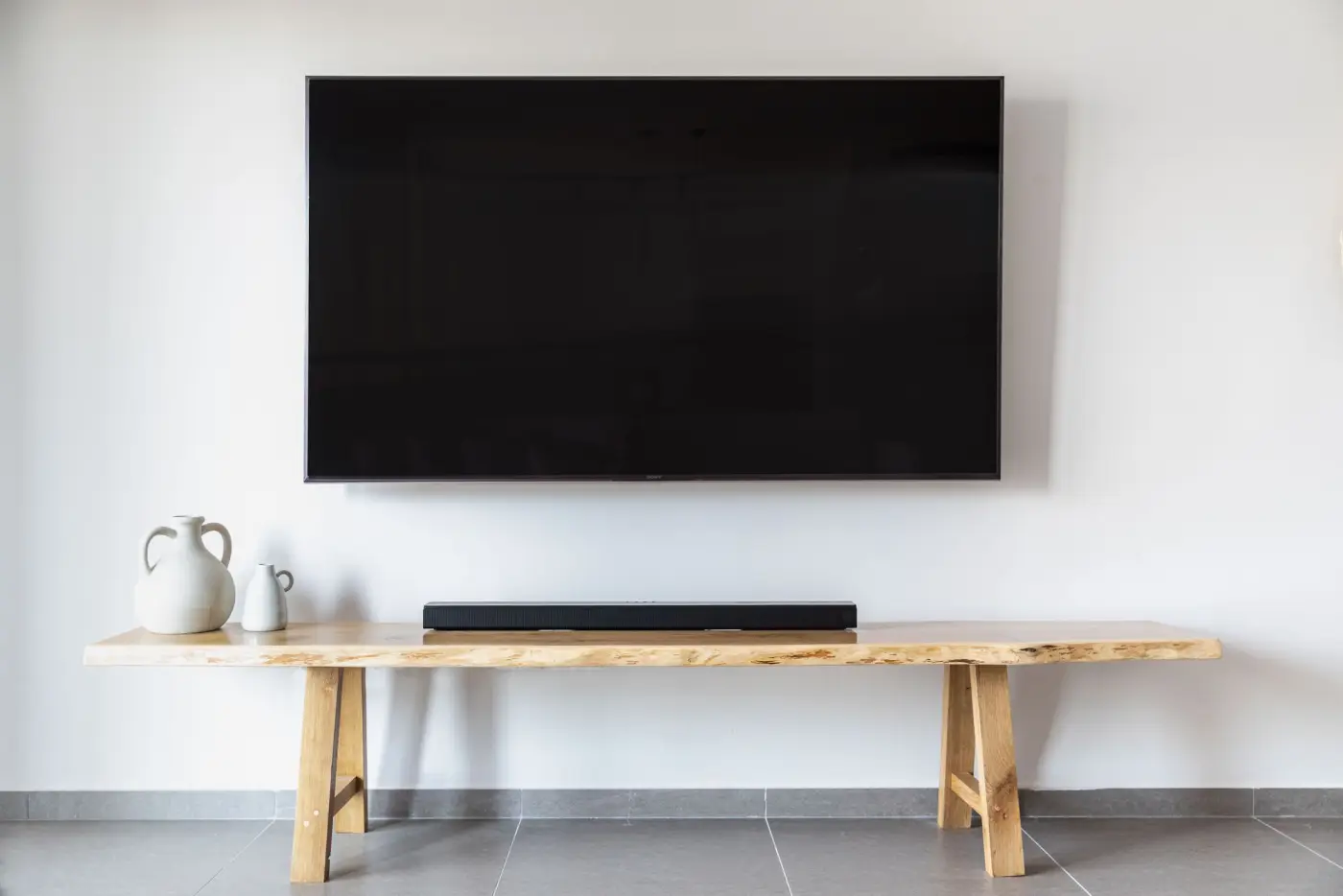
It is the most common first question in home cinema, and the honest answer depends more on the room than on the products. A soundbar puts everything in one box, and a good one is a large step up from television speakers. A receiver with separate speakers takes more space, more cable and more setting up, and gives back things a single box cannot. Here is what each one does, without the marketing.
How a soundbar makes height and surround
Dolby describes two ways a soundbar can produce the overhead layer of Dolby Atmos. Some bars have upward-firing drivers that bounce sound off the ceiling, the same idea as Dolby Atmos enabled speakers. Others use height virtualisation: filters that imitate the way our ears hear sound from above, mixed into speakers that face you. Bars without rear speakers create surround the same way, with processing that suggests sound beside and behind you.
Upward-firing drivers depend on the ceiling. Dolby’s soundbar guidance gives 2.3 to 3.7 m (7.5 to 12 ft) as the ideal ceiling height, with good results in its testing up to 4.3 m (14 ft). The ceiling should be flat and hard, such as plaster or wallboard; acoustic tiles absorb the effect. The bar needs a clear path to the ceiling, so not inside a cabinet or under a shelf, and Dolby suggests sitting at least 1.2 to 1.5 m away. Virtualising bars ask for none of this: Dolby says its height virtualiser needs no special room conditions.
Most bars come with a wireless subwoofer, and some can add wireless rear speakers, which replaces virtual surround with real speakers behind you. Dolby’s paper describes soundbar systems from 2.0.2 up to 7.1.4.
What separate speakers add
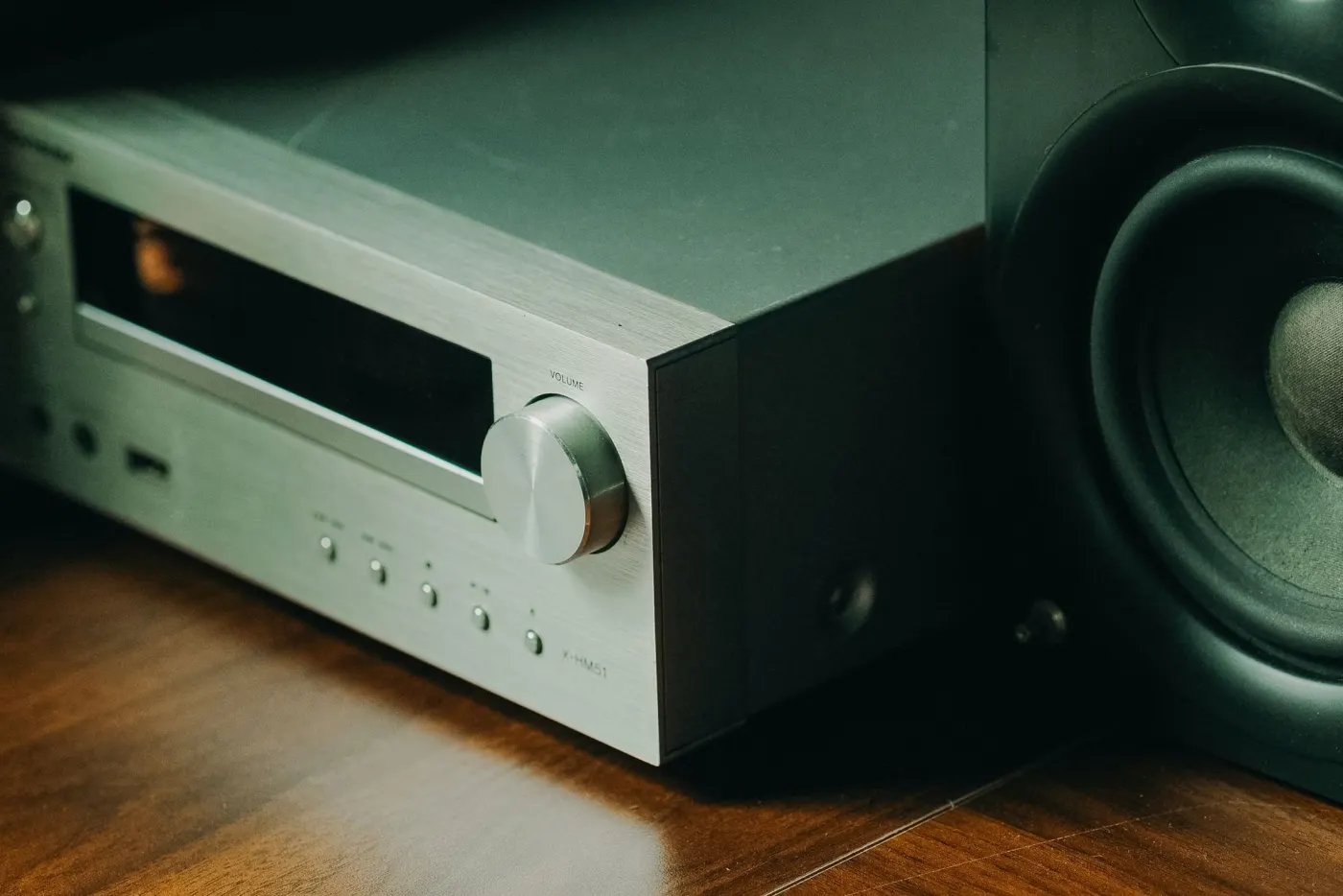
With an AV receiver, every channel is a speaker where it is meant to be: surrounds beside and behind you, height speakers in the ceiling or firing at it. Dolby’s speaker setup guide lists the common layouts from 5.1 to 7.1.4, the last number counting the height speakers. Each sound comes from a real speaker at the right angle, so the sense of direction does not depend on processing.
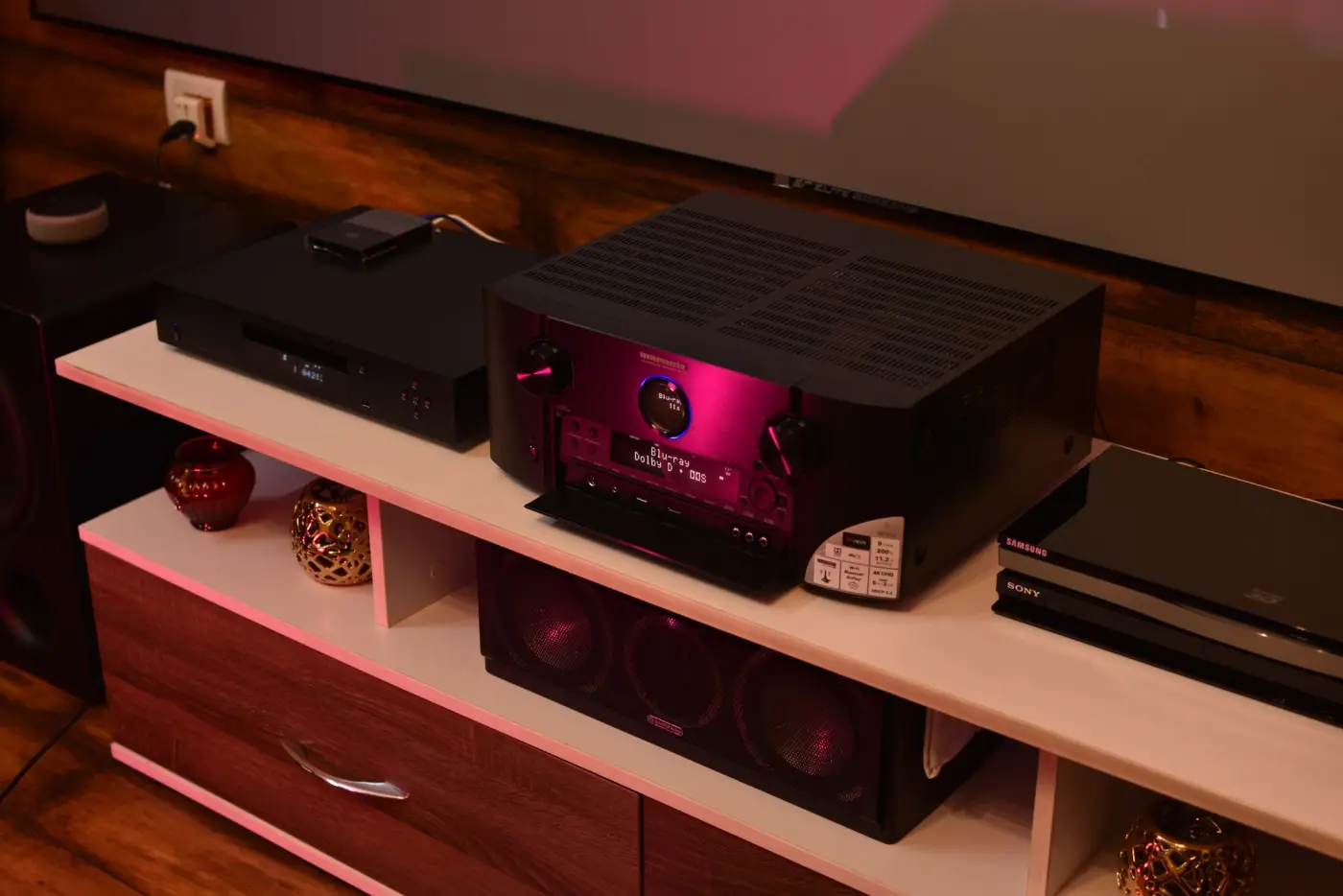
The other advantage is growth. A receiver system can start as 5.1 and add height speakers, a second subwoofer or better front speakers later, one part at a time, and Dolby notes that many existing 5.1 and 7.1 speakers work in a Dolby Atmos system. Receivers also take several HDMI sources directly, and most from the main makers include a room correction system that measures the room with a microphone.
The price is space, cable and time. Speakers need stands or wall space, surrounds need a route for their wires, and the system needs its distances and levels set, by the receiver’s microphone routine and then checked by ear or by measurement.
The right choice depends more on the room than on the box.
Getting the sound into the box
Either way, the soundtrack has to arrive untouched. A soundbar usually connects to the television’s HDMI ARC or eARC socket, so the TV’s own apps, and anything plugged into the TV, send their sound back down that cable. Plain ARC can usually carry Dolby Digital Plus, which is how streaming services deliver Atmos, but not the lossless Dolby TrueHD tracks on discs. eARC carries both.
If you play 4K discs, check that the television and the bar both have eARC, or choose a bar with an HDMI input for the player. A receiver avoids the question by taking the sources itself and sending only the picture on to the TV. Our guide to why a receiver shows PCM follows the chain step by step, and applies to soundbars too.
Choosing for your room
A soundbar suits a room where speakers cannot go: a living room with nowhere for surrounds, a rented flat where nothing can be fixed to the ceiling, a bedroom. Dolby itself says a compact soundbar can often be the right choice in a bedroom. Choose upward-firing drivers only if your ceiling suits them, and a bar that can add real rear speakers if you might want them later.
Separate speakers suit a room where at least five speakers and a subwoofer can be placed, where you want to improve one part at a time, or where you play discs and want every format. Dolby’s home theatre layouts for Dolby Atmos start at 5.1.2, and a 5.1 system can grow into one.
If you are unsure, our room check works out which speaker layout fits your room and where each speaker would go, and the design studio lets you try a layout in 3D before you buy anything.